What the Hell Were They Thinking?
Five Geronimo Moments That Prove We've All Been There
At almost 62, I found myself lying in bed laughing at an old episode of the iconic television show Cheers. I sometimes wonder how I ever enjoyed Friends or thought Seinfeld was funny. Perhaps it's the Bostonian in me, or simply the cast, but I still find myself remembering scenes from Cheers.
This particular morning, it was Frasier Crane. Frasier walks into the bar and notices a sign taped next to a slightly imposing Doberman. He reads it aloud: “What's this? Do not say Cochise to this dog.”
Everybody hits the floor. The dog doesn't move. The gang starts wondering whether Sam has somehow grabbed the wrong dog, since two dogs had been fighting. Woody explains that Cochise isn't the right name. It's the other Indian name. Cliff Clavin starts running through possibilities before eventually arriving at Geronimo. Well, that's when things get interesting. The dog snaps its leash and takes off after Cliff, who makes a rather hasty retreat into the bathroom. LOL.
Now, Cheers had some terrific comedy writers, and yes, this was entirely fictional. But it got me thinking. How many times have real people, famous or otherwise, made spectacular mistakes? I'm talking about those sudden, sometimes well-intentioned, sometimes completely oblivious screw-ups that ordinary people make, too.
Hell, I probably make 12 to 15 of them a year myself. Some mistakes are funny. Some are embarrassing. Others cost fortunes, destroy careers, or have consequences nobody could have imagined. And sometimes the people making them are absolutely convinced they're doing the right thing.
That's what I want to explore.
And I'd like to hear from you, too! Have you ever had your own Geronimo moment? You know, one of those seemingly innocent decisions or comments that set off a whole series of unfortunate events?
Maybe you said something you shouldn't have.
Maybe you pushed ahead when every sensible person in the room knew better.
Tell me about it. Seriously. We can laugh about some of these things. And sometimes, if we're lucky, we can learn something along the way. Because believe me, you're probably not the only one.
And if you've ever been in real life like Cliff in a situation where you accidentally set off a trigger word attached to a four-legged meat grinder, tell us about it!
Seriously. I think we could all use a good laugh.
What Was I Thinking?
I'll say this again: no matter who you are, $50 says we've all been there at least once. If you feel like the stupidest person in the world because you've just done the dumbest thing imaginable, believe me, you aren't alone.
Here are five examples I've found and researched. If they don't make you feel better, at least they'll remind you that you're not the only person who has ever had a spectacularly bad day.
Exhibit 1: The Wrong Turn That Changed History
Archduke Franz Ferdinand — June 28, 1914
The Morning Bombing: The day probably started out like any other official visit. Archduke Franz Ferdinand and his wife, Sophie, were riding in an open-top car through Sarajevo. Seven young conspirators had positioned themselves along the published motorcade route. One of them, Nedeljko Čabrinović, threw a bomb at the Archduke's car. It bounced off the vehicle and exploded beneath the car behind them, injuring several people, including Austrian officers. Franz Ferdinand and Sophie escaped unharmed.The motorcade continued to City Hall, where the Archduke attended an official reception.
Following the bombing, however, Franz Ferdinand decided he wanted to visit the wounded officers at the hospital. That meant changing the afternoon's travel plans.
The Communication Breakdown: Officials decided the motorcade should travel along the Appel Quay rather than follow its originally planned route through the narrower streets of Sarajevo. There was just one problem. Nobody properly communicated the change to the drivers.
According to historian Christopher Clark, the revised instructions were discussed in German. The drivers of the first two cars were Czech and did not understand the conversation.
Nobody translated the instructions for them. So, following the original itinerary, the lead car turned onto Franz Joseph Street. The car carrying Franz Ferdinand and Sophie followed.
And Then Things Got Really Bad.
Governor Oskar Potiorek, who was traveling with the royal couple, realized they had taken the wrong turn and shouted at the driver to stop and reverse. The car came to a halt. Its reversing mechanism was complicated, and the vehicle became immobilized near the corner.
Now, remember that one of the original conspirators, 19-year-old Gavrilo Princip, was positioned nearby, along the original published route. The morning's bombing attempt had failed, but Princip was still there. And suddenly, the Archduke's car was practically sitting in front of him.
Princip stepped forward and fired two shots. One struck Sophie in the abdomen; the other struck Franz Ferdinand in the neck. Both were mortally wounded and died shortly afterward.
The Aftermath
- The Arrest: Princip attempted suicide by swallowing cyanide, but it failed to kill him. Bystanders intervened before he could shoot himself, and he was arrested.
- The July Crisis: The assassination did not automatically start World War I. It triggered a diplomatic crisis that unfolded over the following month.
- The Ultimatum: On July 23, Austria-Hungary issued Serbia a severe ultimatum. Serbia accepted most of the demands but not all of them.
- War: Austria-Hungary declared war on Serbia on July 28, 1914. Within days, the European alliance system drew additional countries into the conflict.
The consequences were staggering. A political assassination in Sarajevo helped set off a war that would kill millions and fundamentally reshape the world.
The Geronimo Moment: Now, if we're looking for a real-life Geronimo moment, I think we might have found one. The Geronimo moment here wasn't necessarily the wrong turn itself. It was the assumption that everyone understood the revised instructions, despite the fact that the drivers couldn't speak the language in which those instructions were given.
A little communication might have gone a long way. Unfortunately, this particular misunderstanding had consequences nobody could have imagined.
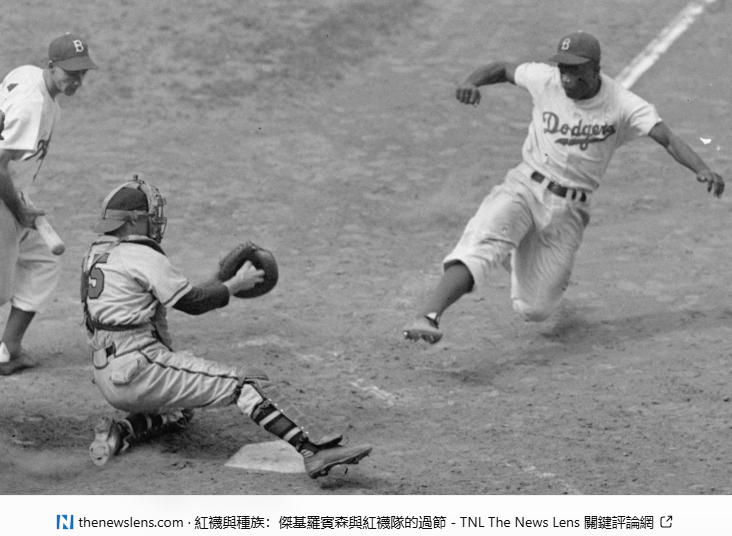
Exhibit 2: Jackie Robinson's Fenway Park Tryout
April 16, 1945
What Actually HappenedThe Political Leverage: In early 1945, Boston City Councilor Isadore Muchnick teamed up with Pittsburgh Courier sportswriter Wendell Smith to pressure the Red Sox to integrate. Muchnick threatened to block the unanimous City Council vote required each year to renew the Red Sox's permit to play Sunday baseball games—a massive revenue stream for the team.
Imagine THAT? They had to be pressured into giving one of the greatest players of all time—and someone who would revolutionize baseball's racial barrier—a chance to join a team that had gone 77-77 the year before and finished fourth in its division.
To give this some current-day perspective, imagine being forced to work out Shohei Ohtani in 2017, with the 1945 Red Sox management team saying: “Well, he's probably going to be one of the greatest players we've ever seen. A two-way player, no less. But I don't know…Japanese?”
Eddie Collins's Deflection: On March 16, 1945, Red Sox GM Eddie Collins wrote a letter to Muchnick claiming the team had never discriminated, stating: “I have been connected with the Red Sox twelve years, and during that time we have never had a request for a try-out by a colored applicant . . . It is beyond my understanding how anyone can insinuate or believe that 'all ballplayers regardless of race, color or creed, have not been treated in the American Way.'”
Why didn't he just take the approach accused racists sometimes take and write, “Yeah, you know, I have a couple of Black friends! I don't want them parking out front, but they can come to my house.”
The Tryout: On April 16, 1945 (delayed two days following the death of President Franklin D. Roosevelt), three Negro League stars took the field at Fenway Park for a 90-minute workout: shortstop Jackie Robinson (Kansas City Monarchs), outfielder Sam Jethroe (Cleveland Buckeyes), and second baseman Marvin Williams (Philadelphia Stars).
Robinson knew the workout was purely political theater. Looking back in a 1972 interview with The Boston Globe, Robinson said: “We knew we were wasting our time. Nobody was serious then about black players in the majors, except maybe a few politicians.” Afterward, Collins told the players they would hear from the club soon. Walking out of Fenway, Jethroe famously remarked to Wendell Smith: “We'll hear from the Red Sox like we'll hear from Adolf Hitler.”
So, the results may have been expected. Jackie performed very well, but the Red Sox passed. I want to share one bit of commentary here, not established history, because it has never been confirmed. Take it at face value. More than 30 years later, Boston Globe sportswriter Clif Keane claimed he was in the empty stands that morning and heard someone yell from the dugout or management area, “Get those [racial slur] off the field!” Keane believed it came from Tom Yawkey, Eddie Collins, or manager Joe Cronin.
A plausible defense was offered by Joe Cronin on behalf of the Red Sox. Years later, Cronin defended passing on the trio by claiming he feared sending Black players to the team's minor-league affiliate in Louisville, Kentucky, where they would face harsh Jim Crow treatment.
The Geronimo Connection: We can't definitively establish every motive behind the Red Sox decision to pass on Robinson. But that doesn't mean we should ignore the documented racial attitudes and circumstances surrounding the decision. The Red Sox passed on an iconic player in Jackie Robinson. And here's another painful piece of Red Sox history: the team won the American League pennant in 1946 but didn't win another World Series until 2004. That's 58 years of waiting after that 1946 pennant.
Based on multiple points of observation and references, the Red Sox's Geronimo moment was making a racially based decision and passing on an iconic player who, in his 1947 rookie year, played 151 games, hit .297 with 175 hits and 74 walks, stole 29 bases (leading the National League), and posted a .383 on-base percentage. That's an All-Star-caliber season.
This blows me away.
The Red Sox could have had a .343 average, 32 home runs, and 114 RBIs from Ted Williams, with Jackie Robinson on the same 1947 roster!
I think the potential was there to do better than an 83-71 record, a third-place finish, and ending up 14 games behind those MOTHER-FU**ing Yankees!
Yell, “GERONIMO, Mr. Yawkey!”
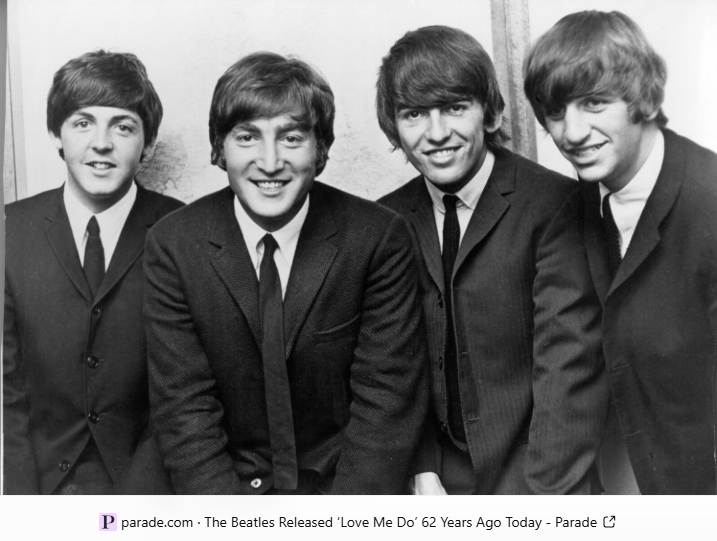
Exhibit 3: Decca Records Rejects The Beatles
January 1, 1962
What Actually Happened When More Than One Person Yelled Geronimo!
The Audition: On New Year's Day, January 1, 1962, John Lennon, Paul McCartney, George Harrison, and original drummer Pete Best drove through a snowstorm to Decca Studios in West Hampstead, London. Junior A&R producer Mike Smith oversaw the session, where the band recorded 15 songs live onto two-track tape in under an hour.
So far, a pretty normal day for Smith, right? No mistakes. Nothing to see here.
Well, this is where things start to turn, and the first Geronimo moment enters the picture. The Song Selection: The Beatles' manager, Brian Epstein, was involved in preparing the audition material. The selection leaned heavily toward safer pop standards and novelty covers, including “The Sheik of Araby” and “Three Cool Cats,” rather than showcasing more of the band's raw rock-and-roll club material. Only three Lennon–McCartney originals made the cut. The band was nervous, the vocals were tight, and Pete Best's drumming was uneven. Not exactly the performance they wanted to leave behind.
And here's an interesting twist: even future Beatles producer George Martin later admitted to biographer Mark Lewisohn that, based strictly on those Decca audition tapes, he would have turned them down, too.
The Real Reason Decca Passed: Senior A&R executive Dick Rowe wasn't even at the audition. Later that same day, Mike Smith auditioned another band: Brian Poole and the Tremeloes. Rowe told Smith that Decca could only sign one of the two groups.Smith favored the Tremeloes. They were local, easier to work with, and less expensive to deal with than a band traveling all the way from Liverpool.
GERONIMO! The Beatles lost out to a band that was more convenient to sign. Roughly a month after the audition, Decca officially passed. Desperate to save the deal, Epstein even went to Decca's sales division and offered to personally buy 3,000 copies of any single the label released for the band. Unfortunately, that message never reached Rowe.
Rowe did offer Epstein a consolation deal: Decca would let the Beatles record a single with producer Tony Meehan if Epstein paid roughly £100 to cover the studio expenses. Epstein met with Meehan on February 7, 1962, found him condescending, and walked away.
GERONIMO, AGAIN! A consolation offer that required the Beatles' manager to pay for the privilege of recording? Epstein decided he wasn't interested. After being turned down by nearly every major London label, Epstein took the Decca audition acetate to EMI's HMV store on Oxford Street to have disc copies made.
The cutting engineer liked what he heard and connected Epstein with George Martin at EMI's comedy-and-novelty subsidiary, Parlophone.Martin eventually signed the Beatles in mid-1962. And the rest, as they say, is music history.
The Geronimo Connection: There wasn't just one questionable decision here. There was the audition material, the choice of which band to sign, and the way the consolation offer was handled. To be fair, the Beatles weren't yet the polished, world-famous group we know today. Their Decca audition wasn't their finest hour.
Even George Martin acknowledged that the tapes didn't necessarily sell him on the band.But Decca had an opportunity. It chose the more convenient option. One record company signed Brian Poole and the Tremeloes. Another eventually signed the Beatles.
I'm guessing Decca executives didn't spend much time celebrating that decision a few years later.
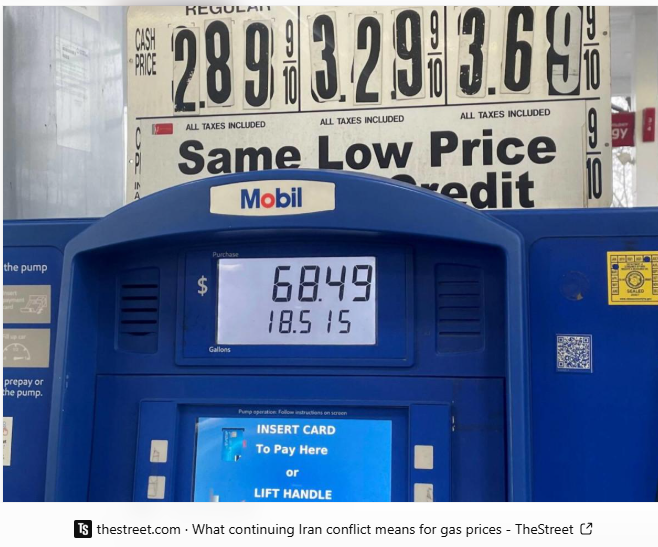
Exhibit 4: The 69-Cent Gas Station Decimal Error
June 9, 2022
What Happened: One Little Dot, One Very Expensive Mistake.
The Original Reporting: The story first broke locally in mid-June 2022 through Sacramento television stations KOVR (CBS13) and KCRA, before receiving national attention from CBS News and ABC News.
The Decimal Mistake: On June 9, 2022, John Szczecina, manager of a Shell gas station in Rancho Cordova, California, was updating fuel prices at the register. He entered the regular and mid-grade prices without a problem. Then he went to set premium gasoline at $6.99 per gallon.
One little mistake: he placed the decimal point one position too far to the left.Instead of $6.99, the pumps displayed $0.69 per gallon. Yes, sixty-nine cents. At a time when California drivers were paying more than $6 a gallon.
The Unnoticed Aftermath: Szczecina clocked out, went home, and went to sleep without realizing what had happened. Meanwhile, drivers began noticing the unbelievable price. Photos and information spread across Facebook, Twitter, and Instagram, and before long, cars were lined up around the block.The bargain lasted roughly three hours. The cashier on duty apparently didn't catch the pricing error, and the station continued pumping gasoline at a fraction of its intended price.
The Immediate Effect: A Very Expensive Bargain The Financial Loss: Estimates put the station's lost fuel revenue somewhere between $16,000 and $20,000 during those three hours. With California gasoline prices at record highs, customers were saving more than $6 per gallon.
The Consequences: When Szczecina arrived for his next shift, the district manager was already waiting. Szczecina didn't deny what happened. He accepted responsibility, telling KOVR: “So I just took responsibility for it and I said, 'yeah, it's my fault, and I'm to blame.'”
He was fired on Monday, June 13, 2022, and handed over his keys.
What Might Have Happened Next? The GoFundMe: Szczecina's sister, Paula Jackson, worried that the station's owners might sue him personally to recover the $16,000–$20,000 loss. She started a GoFundMe campaign to help him pay it back. The campaign initially raised only a small fraction of its goal, around $650 in its first few days.
The Legal Reality: Attorneys interviewed by CBS Austin and KOVR explained that California employment law generally protects employees from being personally responsible for ordinary mistakes made while performing their regular job duties. In other words, the station generally couldn't simply force Szczecina to reimburse the business for this kind of workplace error.
The Public Reaction: Online commenters gave him a new nickname: “Gas Robin Hood.” While he lost his management job over a misplaced decimal point, dozens of drivers got the cheapest tank of gasoline they'd probably ever see.
The Geronimo Moment: Now, let's be fair. Szczecina didn't set out to give away $20,000 worth of gasoline. He made an honest mistake. But here's where the Geronimo effect kicks in. The first Geronimo was entering the wrong price. The second was leaving without catching it. And somewhere along the way, another opportunity to notice the mistake disappeared while cars were lining up around the block. One little decimal point. Three hours. Thousands of dollars. One lost job.
And the really interesting question is: How many of us have made a small mistake, failed to catch it, and watched it grow into something much bigger than we ever imagined?
Sometimes Geronimo isn't a shouted warning.
Sometimes it's just a tiny dot in the wrong place.
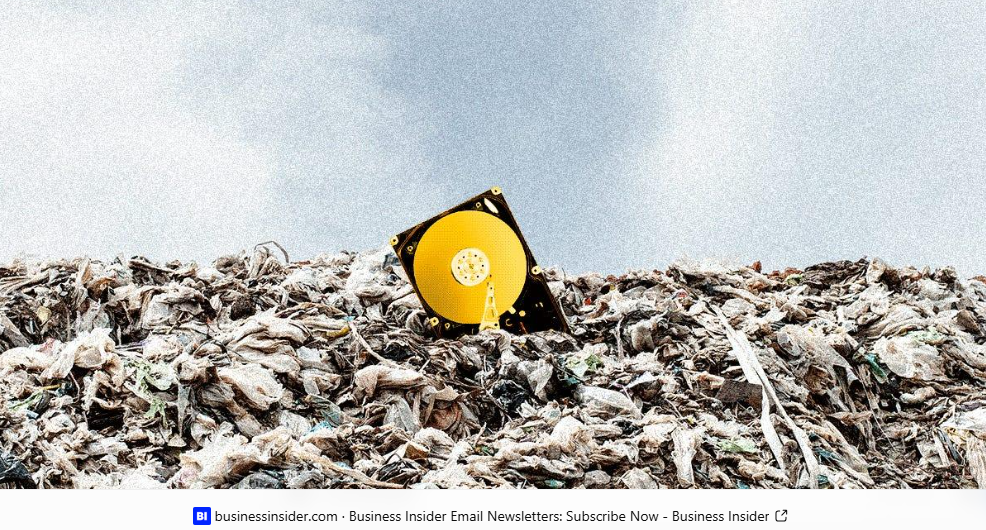
Exhibit 5: James Howells's Discarded Bitcoin Hard Drive
2013
What Actually Happened: One Hard Drive, Two Identical Drives, and a Nearly Billion-Dollar MistakeMining Early Bitcoin
In early 2009, Welsh computer engineer James Howells began mining Bitcoin on his personal laptop, eventually accumulating approximately 8,000 Bitcoin. At the time, Bitcoin was virtually worthless. After spilling lemonade on the laptop in 2010, he dismantled it for parts and saved the 2.5-inch hard drive containing his Bitcoin wallet.
The Fatal Mix-Up: In the summer of 2013, Howells was cleaning out his home office in Newport, South Wales. He had two similar-looking hard drives: one blank and one containing the encrypted file holding access to his Bitcoin. He mistakenly identified the Bitcoin drive as the blank one and placed it in a black garbage bag. One little decision. One wrong hard drive.
The Trip to the Tip: Howells left the garbage bag in the hallway and asked his then-partner, Hafina Eddy-Evans, to take it out with the rubbish. She did exactly that. The bag eventually made its way to the Docksway landfill in Newport.
And just like that, approximately 8,000 Bitcoin went into the trash.
Realizing the Error: Around October 2013, as Bitcoin's price began climbing, Howells went looking for the drive and realized what he had done. By November, it was believed to be buried several feet underground beneath tens of thousands of tonnes of waste.
GERONIMO!
The Immediate Effect: What Was It Actually Worth? Here's where this story gets particularly painful, and where we need to distinguish two very different things: the market value of Bitcoin and the actual value of Bitcoin that cannot be accessed.
Market Value vs. Realizable Value: The 8,000 Bitcoin still existed on the public blockchain. They hadn't disappeared or been spent. But without access to the private keys stored on the missing hard drive, Howells couldn't transfer or use them.In practical terms, an inaccessible wallet might have an enormous theoretical market value, but its realizable value to its owner is effectively zero unless access can be restored.
The Theoretical Price Rollercoaster: The estimated market value of those 8,000 Bitcoin changed dramatically over the years:
- August 2013 — When the drive was discarded: Approximately £500,000, or less than $1 million.
- November 2013 — When Howells realized it was missing: Approximately £4 million, or around $8–9 million.
- Late 2024–2025: As Bitcoin climbed above $100,000 per coin, the theoretical value of the missing Bitcoin reached somewhere between $800 million and $1 billion.
Think about that for a moment. The same hard drive, sitting somewhere under a mountain of rubbish, went from representing less than a million dollars to a theoretical fortune approaching a billion.
What Might Have Been: Twelve Years of Trying to Recover It.
The Excavation Campaign: Rather than accept the loss, Howells spent more than a decade trying to persuade Newport City Council to allow him to search the landfill. He assembled data-recovery engineers and environmental specialists, sought financial backing, and proposed an elaborate excavation involving AI-powered conveyor-belt scanners and robotic dogs.
He even offered to share a substantial portion of any recovered fortune—reportedly between 10% and 30%—with the council and local residents.
The Council's Refusal: Newport City Council repeatedly rejected his proposals. Its concerns included environmental regulations, toxic landfill materials, methane gas, asbestos, and the possibility that years of crushing, corrosion, and exposure had already destroyed the drive.In other words, even if the hard drive could be located, there was no guarantee the data could be recovered.
The Legal Battle: Howells took the council to court, seeking approximately £495 million in damages. In January 2025, the High Court dismissed his case, leaving him facing a reported legal bill of approximately £117,000.
The Final Chapter: After more than a decade of searching and legal battles, Howells reportedly abandoned his effort to excavate the landfill in August 2025. He subsequently pursued other ways to capitalize on the story, including a documentary project, The Buried Bitcoin, and a cryptocurrency venture called Ceiniog Coin.
The Really Painful Irony: Here's another twist. According to estimates in the reporting, Howells spent approximately £2 million in time, legal expenses, consultants, and efforts to recover the missing Bitcoin. Some financial commentators have pointed out that if he had taken that money and simply purchased additional Bitcoin on the open market instead of spending years trying to recover the missing drive, he could potentially have accumulated a substantial fortune.
Imagine spending years trying to recover a fortune buried in a landfill, while spending millions in the process.
The Geronimo Moment! Now, let's be fair. Howells wasn't throwing away a billion dollars in 2013. Bitcoin wasn't worth anything close to that at the time. He was cleaning his office, had two similar-looking hard drives, and made a mistake that plenty of people could imagine making.
But there were several Geronimo moments here.
1. Confusing the two drives.
2. Putting the wrong one in the rubbish.
3. Allowing it to leave the house without realizing what was in the bag.
And then came the years of trying to undo something that couldn't easily be undone. One hard drive. One garbage bag. Approximately 8,000 Bitcoin. More than a decade of legal battles and searching.
Sometimes Geronimo isn't a bad decision made in the heat of the moment. Sometimes it's a decision you don't even realize you've made until it's far too late.
And if you ever think you've had a bad day because you accidentally deleted an important document, remember James Howells. At least your recycling bin probably isn't worth a billion dollars.
So… What Was YOUR Geronimo Moment?
We've covered a lot of ground here.A wrong turn in Sarajevo. A baseball team passing on Jackie Robinson. A record company turning down the Beatles. A misplaced decimal point that cost a gas station thousands of dollars. And a hard drive that may still be sitting somewhere beneath a mountain of rubbish, holding the keys to a fortune.
Some of these mistakes were funny. Some were painful. Some changed history. And some remind us that the people involved were human beings, not characters in a comedy sketch.
That's really what interests me. We all have our moments. Sometimes we know immediately that we've screwed up. Sometimes it takes years to understand what happened. And sometimes we spend the rest of our lives wondering what might have been if we'd made a different decision.
So I'll ask again: What's your Geronimo moment?
Have you ever said something that set off a chain reaction? Made a decision that seemed perfectly reasonable at the time, only to discover later that you'd stepped directly into the path of a runaway Doberman?
Share it with us. The funny ones, the embarrassing ones, the ones that cost you a little money, and even the ones that taught you something important.
No judgment here. I've already admitted I probably have 12 to 15 of these a year.
And remember: if you're ever standing next to a very large Doberman, even if his name is Buttercup and he's gently stroking a kitten…Don't say Geronimo.
Trust me on this one.