Everybody Loves a Treasure Hunt!
Growing up, most of us had our childhood role-playing games. Mostly boys played them, although plenty of girls joined in. Cowboys and Indians, cops and robbers—and, in our house, astronauts. My younger brother Rich and I loved playing astronaut. Full disclosure: I was four years older, and giving him a hard time was practically a competitive sport.
Rich told me he wanted to be an astronaut and walk on the moon, just like the people we watched on television. I decided we could get his training started early. I explained that to be an astronaut, it was essential Rich started his training and needed to experience disorientation, heat, and dizziness.
Naturally, I concluded that the best way to accomplish this was to put my eight-year-old brother in our big front-loading dryer and turn it on high. I was twelve. Rich trusted his older brother. If you have siblings, younger or older? You can probably guess where this is going.
I remember laughing as he bounced around inside that dryer. It was funny until Mom caught on. Apparently, NASA had some safety regulations I hadn't considered.
But let's talk pirates. How many of you played pirate as a kid? Did you draw treasure maps, bury imaginary gold, and dream about growing up to discover fabulous riches aboard a sunken ship?
I did.
And here's the interesting part: some people never outgrow that sense of adventure. They grow up, acquire boats, learn to dive, invest in specialized equipment, and go searching for real sunken treasure. Some are driven by history. Others by the challenge, the mystery, or the possibility of discovering something extraordinary. And yes, some are chasing fortunes that have remained underwater for centuries.
So what happens when childhood treasure maps meet the real world? That's what we're exploring in this blog: the people, the history, the technology, and the sometimes astonishing stories behind the search for lost treasure beneath the sea.
Grab your imaginary cutlass. We're going treasure hunting.
How Much Treasure Is Out There?
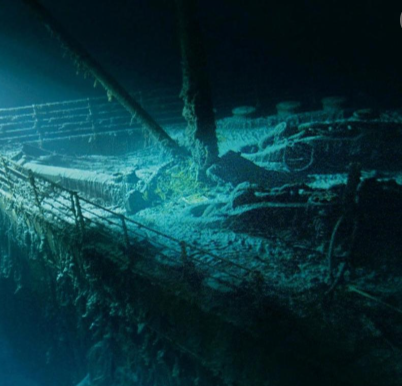
I recently read an article shared by 1440.com that sent me down a fascinating rabbit hole. The United Nations Educational, Scientific and Cultural Organization (UNESCO) has highlighted the enormous number of shipwrecks scattered across the world's oceans.
Estimates often put the number of undiscovered wrecks in the millions, although the exact figure is uncertain. Think about that for a moment. Thousands upon thousands of ships have gone down over the centuries, carrying everything from everyday cargo to gold, silver, jewels, and priceless historical objects.
Some wrecks have been found. Others remain undiscovered, resting in waters that can be extraordinarily difficult and expensive to explore. And the potential value? Depending on which wreck you're talking about, estimates can reach billions of dollars.
Before you request two weeks of personal time, buy an eye patch, and rent a parrot, though, let's look at a few famous examples. Because there's a big difference between finding a shipwreck, recovering its cargo, and actually making money from the discovery.
Where in the World? Five Famous Treasure Ships.
1. The Spanish Galleon San José — Colombia
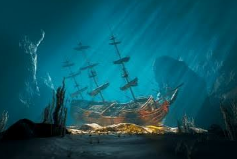
Sunk by British warships off the coast of Cartagena, Colombia, in 1708, the Spanish galleon San José was carrying a valuable cargo during the War of the Spanish Succession. The ship went down with its cargo and hundreds of people aboard. Its wreck was located in 2015, and the site has become one of the world's most famous and contested underwater archaeological discoveries.What's believed to be aboard?
- Millions of gold and silver coins
- Emeralds and other valuable cargo
- Chinese porcelain and historical artifacts
Estimates of the cargo's potential value have reached $17 billion to $20 billion. Those figures are estimates, not money sitting in a bank account waiting for somebody to collect it. Colombia has undertaken scientific investigations and recovery work, while disputes over ownership and the proper treatment of the wreck continue.The exact location is being protected. And for good reason: this isn't simply a treasure chest waiting for someone to grab it. It's also a historical site containing evidence of the people, trade, and politics of its time.
Still, I can imagine a modern treasure hunter looking at all that and saying, "Ahhhh … let 'em try!"
2. The S.S. Central America — America's Ship of Gold
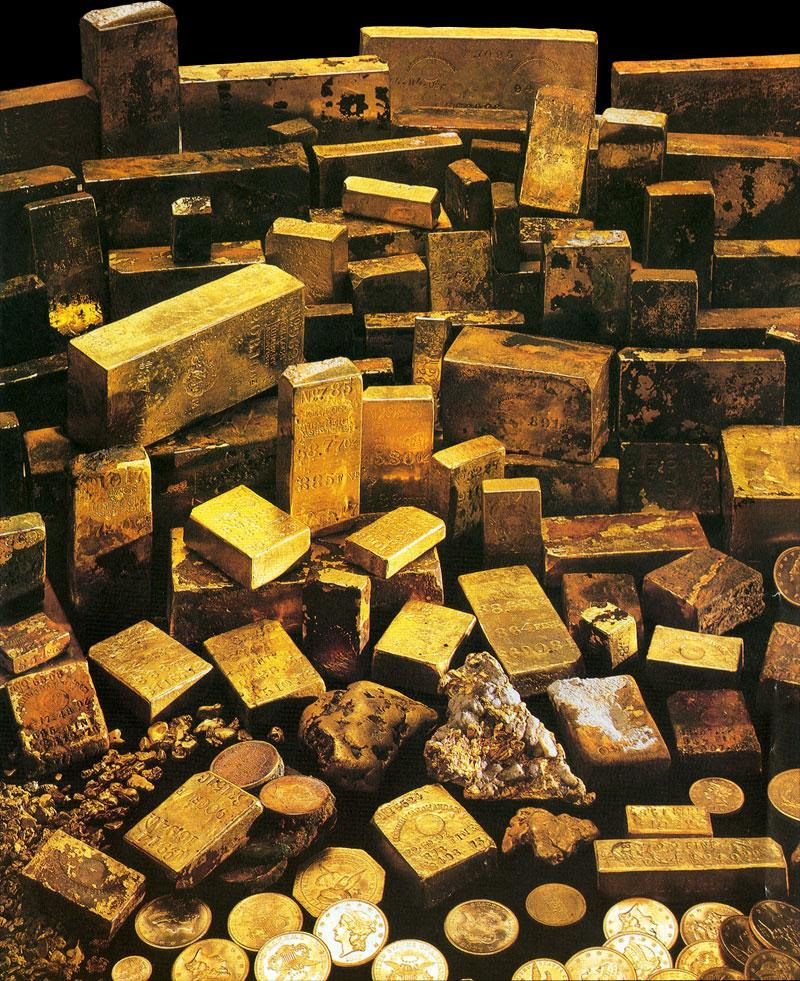
For those of us who prefer to keep our treasure hunting closer to home, there's the S.S. Central America.This steamship sank in a hurricane in September 1857 while carrying gold from the California Gold Rush. Hundreds of passengers and crew members died, and a massive quantity of gold went down with the ship.The wreck was located in 1988, and recovery expeditions brought up thousands of gold coins and other valuable objects. More treasure was recovered during later expeditions. This is a real example of what modern technology can accomplish. Finding a deep-water wreck, mapping the site, and recovering its cargo can require remotely operated vehicles, specialized equipment, and years of work. It also reminds us that these discoveries are not just about wealth. The wreck is a time capsule from an important period in American history.
3. Nuestra Señora de Atocha — The Treasure Hunter's Dream
The Spanish galleon Nuestra Señora de Atocha sank in 1622 during a hurricane near the Florida Keys. Treasure hunter Mel Fisher and his team spent more than 16 years searching before finding the ship's main treasure cargo in 1985. The recovered finds included silver bars, gold, coins, emeralds, and other artifacts. Contemporary estimates put the recovered treasure's value in the hundreds of millions of dollars.
But the story wasn't simply one of finding gold and celebrating. The recovery involved years of effort, substantial costs, legal disputes, and difficult work underwater. The Atocha is a reminder that persistence matters in treasure hunting—but persistence alone doesn't guarantee success. Mel Fisher's famous motto was "Today's the Day!" I suspect there were quite a few days when the crew had to work very hard to believe it.
4. Flor de la Mar — The Missing Portuguese Treasure Ship
Now let's travel to Southeast Asia. The Portuguese ship Flor de la Mar sank in 1511, following the Portuguese conquest of Malacca, in present-day Malaysia. Historical accounts associate the vessel with a valuable cargo, and its loss has become one of the great stories of missing maritime treasure.
Modern accounts sometimes attach enormous dollar figures to the ship's supposed cargo. Those figures should be treated cautiously: the precise cargo, its present-day value, and even the details of the loss are not established well enough to treat a multibillion-dollar estimate as a reliable valuation. The wreck has not been conclusively located. That combination of history, uncertainty, and the possibility of a spectacular discovery is exactly what keeps treasure hunters fascinated.
5. The Merchant Royal — England's Lost Fortune
The English merchant ship Merchant Royal was lost off the coast of Cornwall in 1641 after developing serious problems at sea. It was reportedly carrying a valuable cargo that included silver and gold intended for Spanish forces. The ship's loss has fueled centuries of speculation about the riches that might still lie underwater. You may encounter estimates placing the cargo's value in the billions of dollars. But those figures are speculative, and the ship's precise location and recoverable cargo remain uncertain.
For would-be treasure hunters, that uncertainty is part of the attraction. For would-be investors, it's a reason to be careful.
Can You Cash In?
The short answer? Probably not by going out and finding a ship yourself. Underwater treasure hunting is expensive. Searching for wrecks requires equipment, expertise, vessels, and often years of work.
Recovery can be even more difficult, and legal rights to a wreck and its cargo can be complicated. There are also archaeological and ethical considerations. A shipwreck is not merely a container of valuable objects. It may be a grave site and an irreplaceable record of human history.
What about investing in the industry?
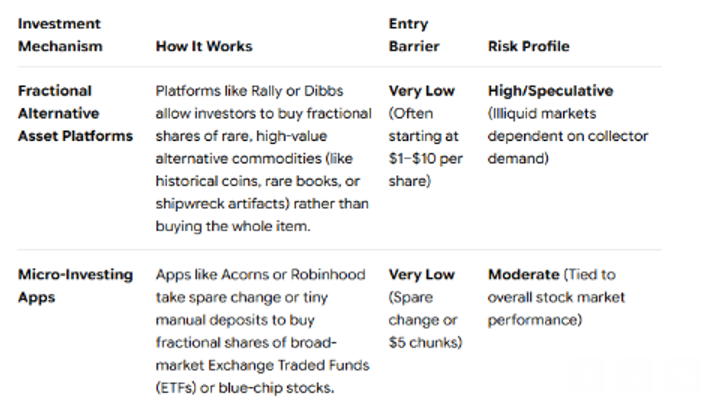
The risks, costs, and potential returns are entirely different. For anyone considering an investment, the sensible starting point is independent research, a clear understanding of the business, and an honest assessment of the risks. I provide some options here:
But FRED! I Want to Invest More!
Okay, treasure hunters, I hear you! Maybe you don't want to stop at reading about sunken fortunes. Maybe you're interested in the industries and technologies that could benefit from exploring the ocean floor. There are a couple of avenues worth researching. Just remember: potential opportunity and low risk are not the same thing.
1. Deep-Sea Mining: High Risk, Potentially High Reward
Deep-sea mining companies are exploring ways to recover valuable metals from the ocean floor. Some of these resources contain nickel, cobalt, copper, and manganese—materials used in batteries, electronics, infrastructure, and other industrial applications.Two publicly traded companies to research are:
- The Metals Company (NASDAQ: TMC) — Focuses on developing deep-sea mineral resources, including polymetallic nodules in the Pacific Ocean's Clarion-Clipperton Zone. Its commercial ambitions face substantial regulatory, financing, environmental, and operational challenges. Metals Company.
- Deep Sea Minerals Corp. (CSE: SEAS; OTCQB: DSEAF) — A Canadian-listed, early-stage company pursuing opportunities in subsea critical minerals. The company has disclosed that it is seeking to secure mineral rights through regulatory processes; it does not currently operate in the Clarion-Clipperton Zone or hold permits for commercial recovery there. Deep Sea Mineral Corp.
The reality check: These are speculative investments, not shortcuts to a fortune. Early-stage companies may need substantial additional funding before generating revenue, and regulatory decisions, environmental concerns, technology challenges, and commodity prices could all affect their prospects. You could lose a substantial portion—or all—of your investment.
2. The “Pick-and-Shovel” Approach: Explore the Technology
During a gold rush, not everyone had to search for gold. Some businesses supplied the picks, shovels, equipment, and services that prospectors needed. The same idea can apply to ocean exploration. Rather than betting on one company discovering a profitable mineral deposit or recovering a legendary shipwreck, investors can research established businesses involved in areas such as:
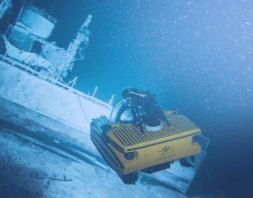
- Underwater robotics: Remotely operated vehicles and autonomous underwater systems.
- Marine engineering: Equipment and services used in demanding offshore environments.
- Seafloor mapping and surveying: Sonar, imaging, navigation, and data-analysis technologies that help researchers locate and examine underwater sites.
- Defense and subsea technology: Systems used for underwater monitoring, inspection, and exploration.
Some companies in these industries serve multiple markets, which may make their business models less dependent on the success of any single treasure hunt. However, that doesn't automatically make their stocks safe. Their results can still be affected by debt, competition, government contracts, economic conditions, and other business risks.
The important distinction is that these businesses may earn revenue by providing equipment and services, rather than having to discover a valuable deposit themselves.
Before You Invest
As I ALWAYS advise with everything. Do your homework. Read company filings, examine financial statements, understand how a business earns revenue, and consider its debt, cash reserves, and need for additional financing. For smaller companies, pay particular attention to share dilution and the possibility of future fundraising. And remember, this is an introduction to an industry—not a recommendation to buy any particular stock.
Never invest money you need for essentials or your emergency fund in a speculative venture. My take? The technology behind exploring the ocean floor is fascinating, whether or not a particular expedition finds treasure. You don't need to own a piece of a treasure hunt to enjoy following it—and if you do decide to invest, make sure you understand the business before you buy the dream.
A treasure story is not an investment thesis. And for the rest of us? There's nothing wrong with enjoying the fantasy. We can read the stories, marvel at the technology, and follow the discoveries without risking our savings on a treasure hunt.
The Real Treasure
The ocean still holds enormous mysteries. New technology allows researchers to map the seafloor in greater detail, investigate wrecks in deeper water, and recover information that would have been inaccessible to earlier generations.
Sometimes the prize is gold or silver. Sometimes it's a piece of porcelain, a ship's bell, or a clue that changes what historians thought they knew.
The wealth that may lie beneath the sea is fascinating, but the stories are what keep me interested.
- So keep your pirate maps.
- Keep your imaginary cutlass.
- Keep dreaming about the day someone discovers a lost ship and changes history.
Just don't put your little brother in the dryer to prepare him for the adventure.
Trust me on that one. Happy hunting!