Smart Glasses, Robot Butlers, and AI That Remembers Your Life
Welcome to the next generation of consumer technology.
Earlier this year, Snap announced its new SPECS augmented-reality glasses, opening preorders at $2,195 with a $200 refundable deposit. These aren't simply ordinary glasses with a camera and a voice assistant. Snap is pitching SPECS as a true augmented-reality experience, placing digital content into the world around you. As of October 2026, Snap says the glasses are expected to ship in the fall, although an exact date hasn't been announced. Tom's Guide has questioned whether the price makes sense for a first-generation device.
And that's a fair question. When you're spending more than $2,000 on glasses, you'd better be getting something extraordinary. But here's the interesting part: not all smart glasses are created equal. Meta has been making a strong push into this market, with Ray-Ban Meta models starting at considerably lower prices. Its newer display-equipped glasses are a different proposition from its camera-and-audio models, and they're worth distinguishing when comparing features and cost.
The premium price of Snap's SPECS reflects its more ambitious augmented-reality hardware, including two displays. Meta's display-equipped model takes a different approach, while its standard Ray-Ban Meta glasses focus on features such as photography, audio, and AI assistance.
In other words, comparing these products strictly by price is a little like comparing a pickup truck with a sports car. Both have four wheels, but what they do with them is another story.
A Technology Story Worth Celebrating
Here's something I genuinely appreciate about this emerging technology. Meta announced that it would donate Ray-Ban Meta AI glasses to legally blind American veterans through a program coordinated with the Blinded Veterans Association and other partners. More than 130,000 veterans are potentially eligible.
The glasses can help users identify objects, read text, and better understand their surroundings through voice-controlled AI assistance. That's technology with a practical purpose, not simply another shiny gadget looking for a place on your credit card statement.
If you want to request a pair, feel free to click this link. Eligible veterans can learn more through the Blinded Veterans Association's official program page. It's a terrific example of how consumer technology can potentially improve independence and quality of life. There are still practical limitations, of course, but this is a development worth applauding.
Which Smart Glasses Should You Consider?
If you're curious about trying smart glasses yourself, here are three products worth investigating. Prices and availability can change, so check the manufacturer's current listing before buying.
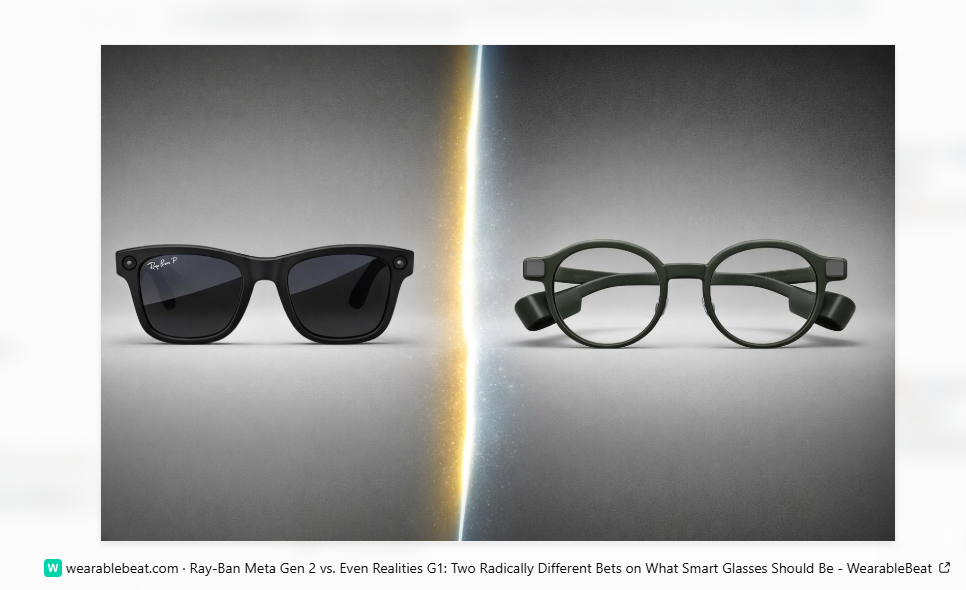
- Even Realities G2 — Approximately $599. A display-focused option worth researching if you want information presented in your field of view.
- Ray-Ban Meta Gen 2 — Approximately $379. A camera-and-audio option for people interested in hands-free photography, calls, and AI features.
- Meta Ray-Ban Display — Approximately $799. A more advanced option that adds an in-lens display and associated interaction features.
Apple has announced plans to launch its own smart glasses at its developer conference in June 2027. Of course, product announcements and actual release dates don't always get along. Treat that date as a plan, not a promise.
Then again, I was the guy standing outside a closed store for four hours. Apparently, common sense wasn't included in either of our purchase packages.
Take it from me. Years ago, I stood outside a dark Apple store on Boylston Street in Boston for four hours because a friend named Matt paid me $50 to claim an extra iPhone. Matt was convinced he had inside information and refused to give up his place in line. I never claimed Matt had a lot of common sense.
As consumers, we're likely to face an increasingly crowded market. That makes careful research more important than ever.
I've always believed in doing your homework before spending your money. My first wife, Faye, eventually became a Quality Control Director at a Boston biotechnology company.
A Lesson in Shopping From Faye
Long before that, she was teaching me how to research purchases properly. Friends would laugh at us as we pored over consumer reports and trusted review websites before buying practically anything. We weren't necessarily trying to find the cheapest product. We wanted to understand our options and determine which one offered the best value.
Even an electric can opener could inspire a Saturday afternoon of research. And when Faye decided she wanted a Subaru Outback? Let's just say the salesperson was going to need more than a pleasant smile and a polished sales pitch.
She knew the retail cost of practically every accessory available. There was a funny twist, though. If she liked the salesperson's effort, she'd quietly suggest allowing the sales rep an extra 8% commission, perhaps 10% at most, during negotiations. She wanted a fair deal, and she wanted the salesperson to earn a living, too.
That's a lesson I still believe in: be thorough before you buy, understand what you're paying for, and don't confuse the lowest price with the best value. If you're considering smart glasses, a good starting point is this consumer guide: The 8 Best Smart Glasses of 2026 — Lifewire.
Read reviews, compare specifications, understand the privacy implications, and decide which features you'll actually use. There's no point paying for futuristic capabilities that spend their entire lives gathering dust in a drawer. And that brings us to the next stage of our emerging-technology adventure.
Coming Soon to Kim's Warriors: Home Robots and AI That Remembers Everything
1. Home Humanoid Robots: Meet Your New Housemate
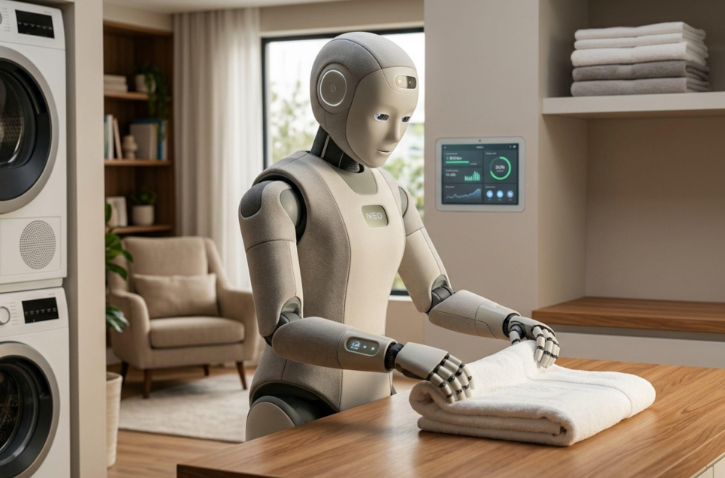
Imagine coming home after a long day and finding that someone has put away the dishes, helped with the laundry, and taken care of a few other household chores. Now imagine that someone is a robot. Home humanoid robots are designed to move through human environments and perform a variety of tasks rather than being limited to a single job.
Unlike a robotic vacuum, which has a relatively narrow purpose, a general-purpose humanoid is intended to learn and perform different activities as its capabilities develop. Companies are experimenting with softer exterior materials, compliant mechanisms, and other safety-oriented designs to reduce the risks of physical contact. However, these systems are still developing, and no responsible buyer should assume that a humanoid robot is automatically safe around people simply because its manufacturer describes it as soft or gentle.
One company attracting attention is 1X Technologies, whose NEO home robot is available to preorder. The company lists an Early Access purchase price of $20,000 or a subscription option of $499 per month, with a $200 deposit. Its ordering page says U.S. deliveries start in 2026.
There is an important catch: NEO's early capabilities are limited, and 1X says its Expert Mode can involve remote human supervision to help the robot perform unfamiliar tasks. That's something potential buyers should understand before handing over their money. You can explore the official NEO ordering page and examine the details for yourself.
And for anyone wondering where we've seen something like this before, think of Lieutenant Commander Data from Star Trek: The Next Generation or Rosie, the robot maid from The Jetsons.
Of course, the real world doesn't come with a Hollywood script, and your future robot housemate probably won't have Data's personality or Rosie's decades of animated housekeeping experience. Also, if you buy one, don't expect it to look or behave exactly like the robots in your favorite science-fiction series. Hollywood has a rather generous special-effects budget.
We'll examine what these machines can actually do, what they cost, how they work, and whether they're approaching the point where an ordinary household might reasonably consider buying one. We'll also look at Amazon Astro, a much smaller, wheeled home robot. It isn't a humanoid and shouldn't be confused with one, but it offers another perspective on how companies are trying to bring mobile robots into domestic life.
2. Screenless AI Pendants: A Second Brain You Can Wear
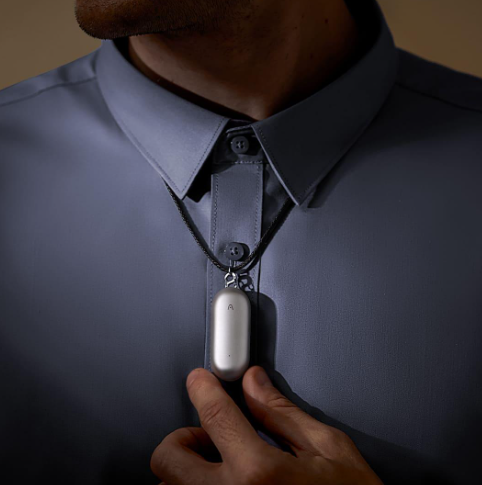
Here's another emerging technology that deserves a closer look. Imagine a small device worn around your neck or clipped to your clothing that helps you remember conversations, capture ideas, and organize information from your day.
- No screen.
- No constant scrolling.
- No frantic search through your phone because you can't remember the name of that restaurant your friend recommended.
These devices use microphones and artificial intelligence to capture or process information, generate transcripts or summaries, and help retrieve useful details later. The precise capabilities vary by product, and some require subscriptions or a connected smartphone.
The appeal is straightforward: instead of relying entirely on your memory, you have a searchable record of information you've chosen to capture. Imagine remembering what your boss said during a meeting, the name of that book someone recommended, or the date of an upcoming assignment without digging through a dozen apps.
Two products worth investigating are: Bee Pioneer — approximately $50. Bee is an ambient AI wearable designed to help capture thoughts and conversations, produce summaries, and organize information. Amazon acquired the Bee startup in 2025, and the company has continued developing the platform. Its features and pricing should be checked before purchase.
PLAUD NotePin — approximately $159–$179. The NotePin is a wearable AI recording and note-taking device designed to capture conversations and turn them into organized information. It offers a different approach to the same basic problem: helping people keep track of what matters without typing everything themselves.
The Bottom Line
These gadgets also raise serious questions about privacy. Recording conversations can affect the people around you, not just the person wearing the device. Consent, local recording laws, data storage, and the manufacturer's privacy policies all deserve attention before you use one. That's part of what we'll examine in our upcoming review. Because the future isn't just about what technology can do. It's also about how responsibly we choose to use it.
Smart glasses, humanoid robots, and wearable AI companions may sound like the stuff of science fiction. Increasingly, however, they're becoming real products that consumers can investigate, preorder, or buy. Some will prove useful. Some will be overpriced experiments. Others may eventually change how we live and work in ways we're only beginning to understand.
At KimsWarriors, we're going to explore these technologies with curiosity, a healthy dose of skepticism, and an eye on what they mean for ordinary people. We'll look beyond the advertising, examine the actual capabilities, compare the costs, and ask the questions that matter before you open your wallet. After all, the future is exciting. But there's no reason to pay $2,000 for it before doing your homework.
And somewhere, I suspect, Faye is smiling.