Once Swallowed a Worm for Good Reason. Why We Should Swallow a Battery Together!
Honestly, have you ever swallowed something questionable because of fraternity or sorority pressure, an altered mental state, curiosity, stupidity, or some other reason? Maybe you thought it would be fun. Maybe you lost a bet. I am guilty of the latter.
I once lost a bet with a 9-year-old girl and had to swallow a worm—a story I have already shared. So naturally, when I came across a story about swallowing a battery, I was intrigued. Imagine swallowing a tiny medical device that can send a signal from your stomach, monitor a specific condition, deliver a treatment, or help confirm that you took your medication.
Now imagine the battery powering it doesn't need to be retrieved, doesn't rely on a conventional lithium-style cell, and gradually breaks down after it has done its job. Yeah. I had questions. I found the story teaser on 1440.com, and at 3 AM—when I apparently do some of my best mental processing—I started digging.
With some help from Perplexity.AI, additional research, and several other sources, I went down the rabbit hole. And what I found was pretty damn fascinating.
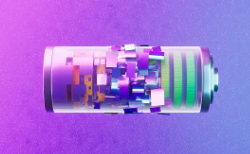
Apparently, MIT researchers have developed tiny batteries designed to safely break down inside the body, potentially expanding what ingestible medical devices can do.Such devices can monitor vital signs, deliver drugs, or detect medical emergencies. But conventional batteries can create problems if a device is damaged inside the gastrointestinal tract. In animal tests, one battery powered a small wireless tracking device that transmitted data from the digestive tract up to about 5 feet away. Another powered a stomach-stimulation capsule that increased the production of the hunger-related hormone ghrelin by roughly 50% after 20 minutes. Separately, tests in simulated stomach fluid found that the batteries functioned for up to about three days before gradually losing power.
Kinda cool, right? Hasn't science fiction done this before? Shows, cartoons, and movies have been playing around for decades with the idea of miniaturized scientists being injected into—or traveling through—the human body to solve medical problems. I read this and thought: “I'll be damned. How close are we?” Read on.
The Core Thesis of What I'm About to Share
Of COURSE this isn't the sci-fi version. We're nowhere near shrinking doctors down to the size of a grain of rice and sending them into your bloodstream. And frankly, I'm not sure we want that. The real story is much more interesting. Researchers may be removing one of the hardest practical barriers to swallowable medical devices: How do you safely power a tiny electronic device inside the human body long enough for it to actually do something useful?
A capsule can sense, communicate, release medicine, or stimulate tissue—but only if it has power. That's where conventional tiny batteries can become a problem. Some use materials such as lithium or silver oxide that can pose safety concerns if a capsule is damaged inside the gastrointestinal tract.
MIT's approach is different. The researchers are designing the battery itself to be bioresorbable—meaning it can break down and eventually be absorbed or otherwise processed by the body—instead of leaving a conventional battery behind. Researchers made two versions: a pencil-eraser-sized disc and a roughly 1-inch-long rectangle Bioresorbable Batteries.
Both use magnesium and molybdenum trioxide, along with a gel electrolyte and chemically treated paper, with a wax coating designed to protect the battery from the gastrointestinal environment long enough to perform its job. And here's where things get interesting.
What Should Make This Interesting to You
Some people are already calling this technology a “smart pill.” Which, let's be honest, is kind of funny. But the concept is serious. The technology itself isn't brand new. Ingestible medical devices already exist in limited forms, including camera capsules, sensors, drug-delivery systems, and devices designed to help monitor medication adherence. But power is a major engineering problem. A device can be incredibly “smart,” but if its battery can't safely operate inside your body, that intelligence isn't doing anybody much good.
MIT's battery produced 1.84 volts and powered two very different functions in animal studies:
Alert: Geeky Quasi-Tech Stuff Ahead
- An RFID-based device that transmitted a signal from the digestive tract to an external detector up to about 1.5 meters away.
- A stomach-stimulation capsule that delivered electrical current and increased ghrelin—the hormone associated with hunger—by about 50% after 20 minutes of stimulation.
Will You Join Me in Swallowing a Battery?
That range of demonstrations matters. Why? Because the battery wasn't merely sitting in a laboratory dish proving that it could produce electricity. It provided enough power for communication and for a medically relevant biological action. That's a much bigger deal.
Most people instinctively would say: “Hell no.” And I understand that reaction. But understanding that reluctance points directly to the problem MIT is trying to solve. The researchers made the battery's electrodes from magnesium and molybdenum trioxide—materials selected because they can be tolerated by the body in small amounts.
The battery also uses a bioresorbable ionic-gel electrolyte. In simulated gastric fluid, the batteries functioned normally for about three days and then gradually lost performance. MIT reports that the components ultimately broke down over the following weeks.
And here's a key part. Not necessarily the most important part, but it may ease anyone's fear that this thing is going to sit inside you and suddenly go off like E.T. and a night-light. Embarrassing. Instead of designing medical electronics to survive inside the body forever, MIT is designing them to do their job briefly and then get out of the way. That is the part I find really clever.
Can You Imagine? Medication May Become Trackable.
One practical application is medication adherence—whether a patient actually took a prescribed medication. The MIT team incorporated the battery into an RFID system designed to transmit information about a capsule's location from inside the gastrointestinal tract.
Stay with me here.
The technology could eventually help verify that a medication-carrying capsule was swallowed and is moving through the body as expected.
Think about that. It could matter in situations where missed doses are especially dangerous, or where clinicians need to determine whether a treatment isn't working because the medication itself failed—or because it wasn't taken consistently. Even at 3 AM, I realized something important while researching this, and I want to stress it here: This technology may help confirm ingestion or track a capsule. It does NOT create total, continuous access to every part of a person's body. That's an important distinction. We're talking about a very specific medical tool, not a tiny GPS satellite taking up residence in your stomach.
It Points Toward Treatments That Work With the Body
The hunger-hormone experiment offers a particularly interesting glimpse at where this technology could eventually go. Not just diagnosing problems. Not just monitoring something. But using a temporary swallowed device to encourage the body to produce a response of its own. Researchers are exploring capsules that electrically stimulate the stomach lining to increase ghrelin production.
For those unfamilar. No problem; got you. Ghrelin plays a role in appetite and other gastrointestinal functions. Researchers say approaches like this could someday be relevant to conditions involving severe nausea or appetite loss, including cachexia—the dangerous loss of body mass that can occur with cancer and other serious illnesses.
Think about what I just said from a slightly different perspective: A future pill might not simply carry medicine into your body. It could briefly communicate with your gut and encourage your own body to release one of its helpful hormones.
That's a pretty wild concept.
What NOT to Get Excited About—Yet
Hey, I'm not lining up to swallow a battery tomorrow. Bet or otherwise. There are still significant questions to answer. For example:
- The battery functioned for about three days in simulated gastric fluid and powered devices during animal testing. It has not yet been proven safe or effective in humans.
- The RFID system transmitted a signal from the gastrointestinal tract up to about 1.5 meters. It did not provide a full, real-time map of the entire body or all bodily functions.
- Stomach stimulation increased ghrelin by about 50% after 20 minutes in animal testing. That does not establish a human treatment for appetite loss, nausea, cancer-related cachexia, or eating disorders.
- The components are designed to be bioresorbable. That does not mean every future smart pill will automatically be harmless, approved, or ready for routine medical use.
In other words: Cool science? Absolutely. Ready to replace your medicine cabinet? Not even close.
BUT THE FUTURE?
This is where I really started paying attention. MIT says it is planning a clinical trial for its related SAFARI medication-adherence system and expects that work to begin in roughly two years.
That's encouraging.
But it's important to understand what that means. It's a planned next step—not evidence that this particular battery is already ready for everyday medical care. And that distinction matters. We often focus on the flashy technology we can see. The robot. The surgical machine. The futuristic scanner. The artificial intelligence.
But sometimes the most important breakthroughs are the tiny pieces of engineering nobody notices. The battery. The sensor. The communications system. The little piece that makes everything else possible. That's what I think is fascinating about MIT's dissolving battery. It's not a tiny army of doctors crawling around inside you. It's not a medical GPS tracking every bowel movement you've ever made. And no, you aren't going to wake up tomorrow with an MIT researcher announcing: “Congratulations! We have installed the Fred 3000.”
Instead? This it's a small piece of engineering that could help make swallowable electronics safer and more practical. A device could potentially diagnose, communicate, monitor, or treat something from inside your body—and then, when its job is finished, disappear. And someday? Like me, I hope many of you will be ready to line up and say: “Where do I sign up to swallow a battery?”
All joking aside, this is technology worth watching. Because if researchers can make these systems safe, reliable, and effective in humans, we may be looking at one more step toward a future where some medical devices don't need to stay inside you. They just need to do their job—and then get the hell out of the way.